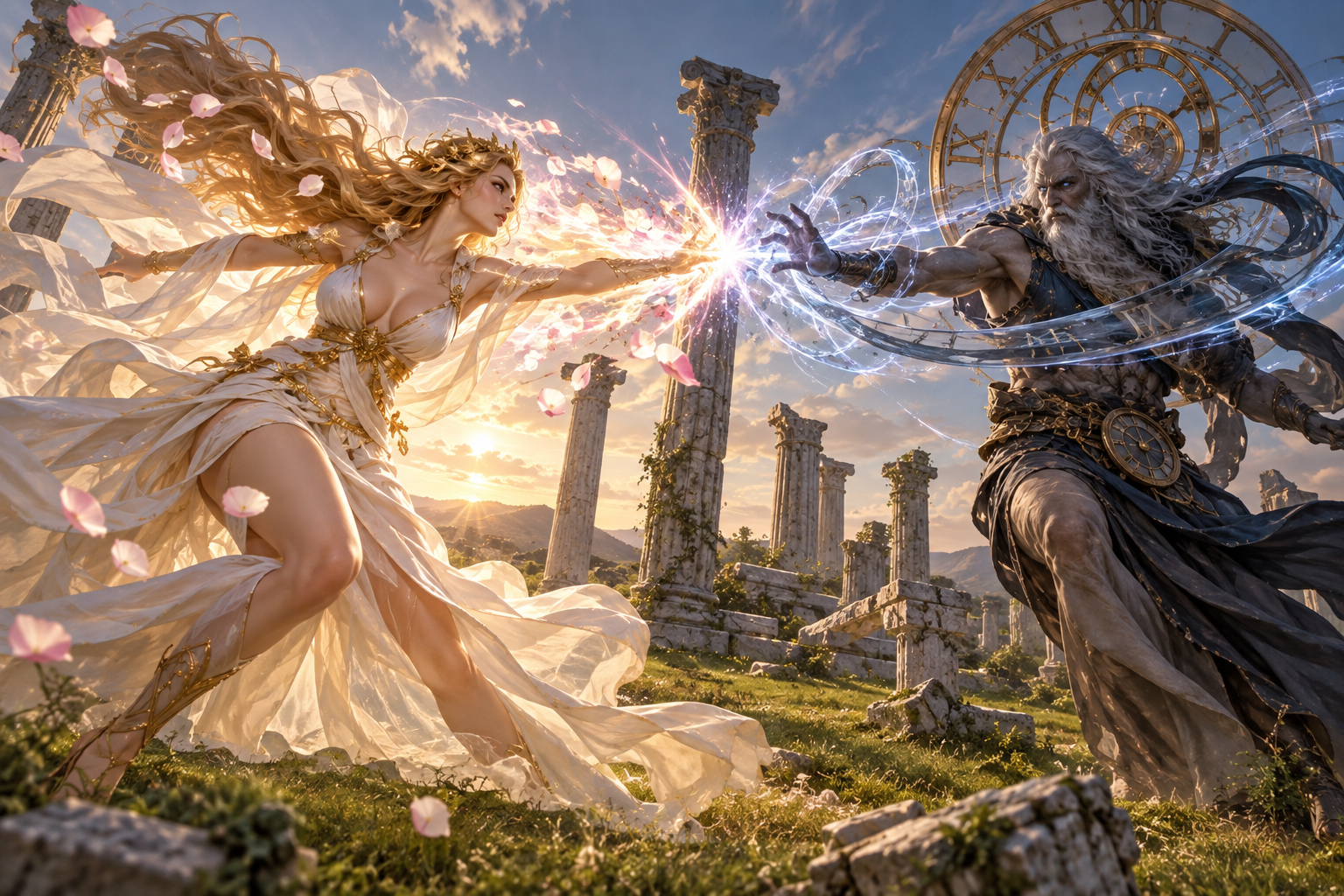
Newtonia the White's story began not with a birth, but with a death. For long ago, the goddess of beauty waged a war against the god of time. Though she emerged victorious, in a cruel twist of irony she sacrificed everything that once made her beautiful. Her body had become an eroded husk, her once-resplendent clothes had turned to rags, and her precious diamonds had turned to dust. As she beheld her now hideous form in a mirror, she found herself unable to weep, and exploded the mirror in a fit of apoplectic rage. In her heart of hearts, she wished for death. Being a goddess, her wish was immediately granted.
Meanwhile, a little human girl had just made her own wish. It was a bitterly cold winter night, and a shooting star had just shot by her frost-encrusted window. As she ran her fingers lovingly over her porcelain doll—her only toy—it suddenly began to move beneath her soft fingers. The girl squealed with delight, while the goddess shuddered with confusion. It took her some time to overcome her shock, but she quickly discovered that in a strange twist, her beauty had been restored. The goddess used her magic to grow to human size, and they became fast friends both playing and chatting with each other through the decades.
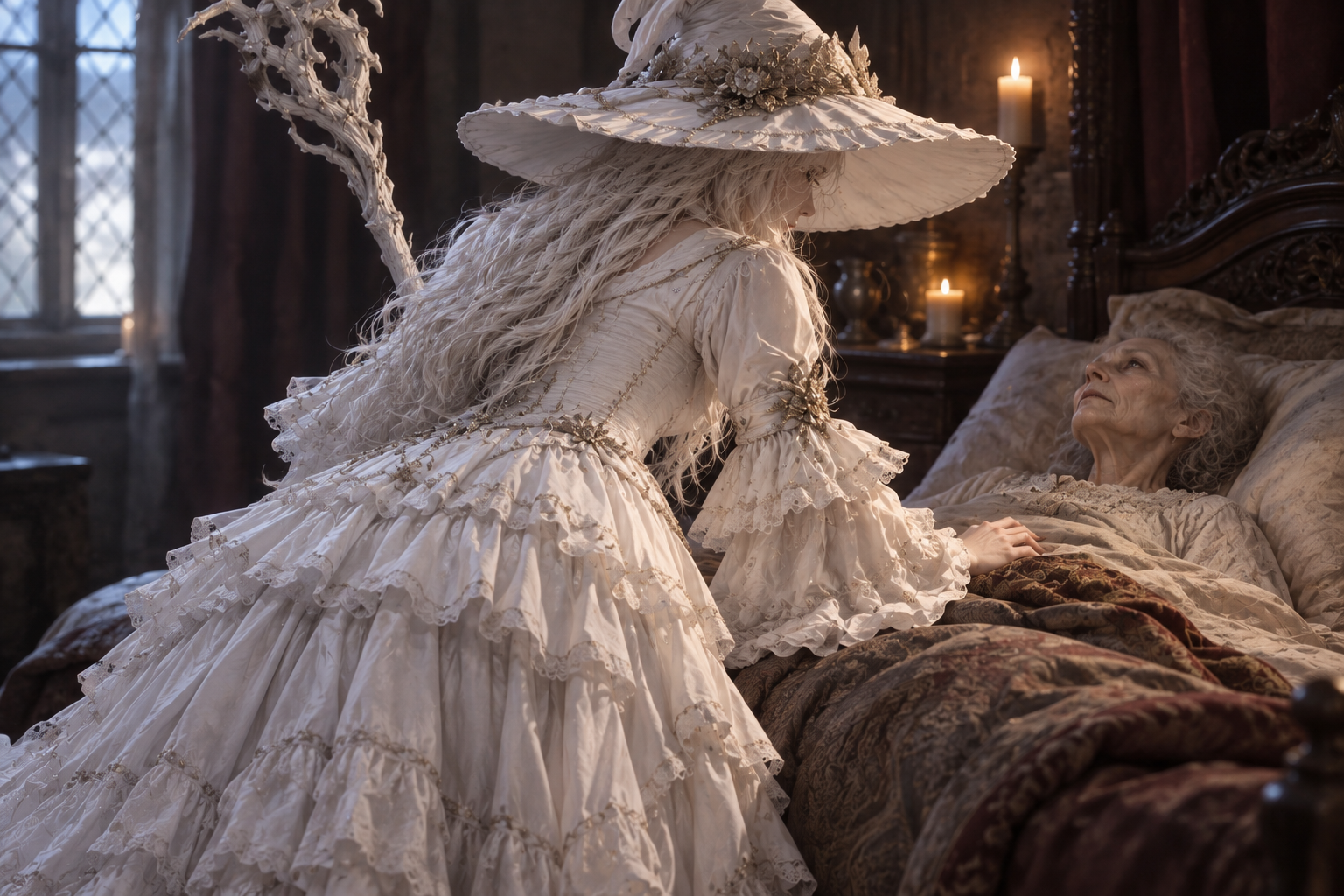
The story ought to have ended here, but it didn't. Relentless time transformed the young girl into an old woman, while the doll remained as fresh and new as ever. As the goddess beheld her friend on her deathbed, rage and sadness twisted together into a knot in her stomach as she bitterly discovered that she was once more unable to cry. As the old woman breathed her last, the doll leaned over her and uttered a solemn promise.
"I am the goddess of beauty," she said. "And I promise you, I will find a way to turn back the pages of time, to bring you back to life."
The doll’s promise became a mission, and her mission an obsession. She abandoned the little forest cabin that had been her entire world and ventured into the lands of men, searching for some magic capable of undoing what even a goddess could not prevent. Everywhere she went, she found reminders of her ancient enemy. Flowers withered. Mountains crumbled. Kingdoms became ruins. Children became parents, parents became grandparents, and grandparents disappeared into graves. Time had already taken her beauty, and now it threatened her with an eternity of taking away everyone she would ever love. Meanwhile, Newtonia began recovering fragments of her forgotten divinity, and mortals soon came to regard the strange porcelain wanderer as a formidable witch. She was happy to let them believe it.
But resurrection proved more complicated than Newtonia imagined. She could summon flames, mend flesh, halt decay, and even coax the dead into motion, yet none of these things could restore the girl she remembered. Slowly, Newtonia became convinced that the answer lay in the one mystery her divinity had never allowed her to understand: mortality itself. She began searching for a way to become truly human—to feel warmth and hunger, exhaustion and pain, to bleed, to age, and perhaps even to cry. Somewhere in those fragile sensations, she believes, lies the secret that separates genuine life from mere existence. And when Newtonia finally understands that secret, she intends to keep the promise she made beside a deathbed long ago.
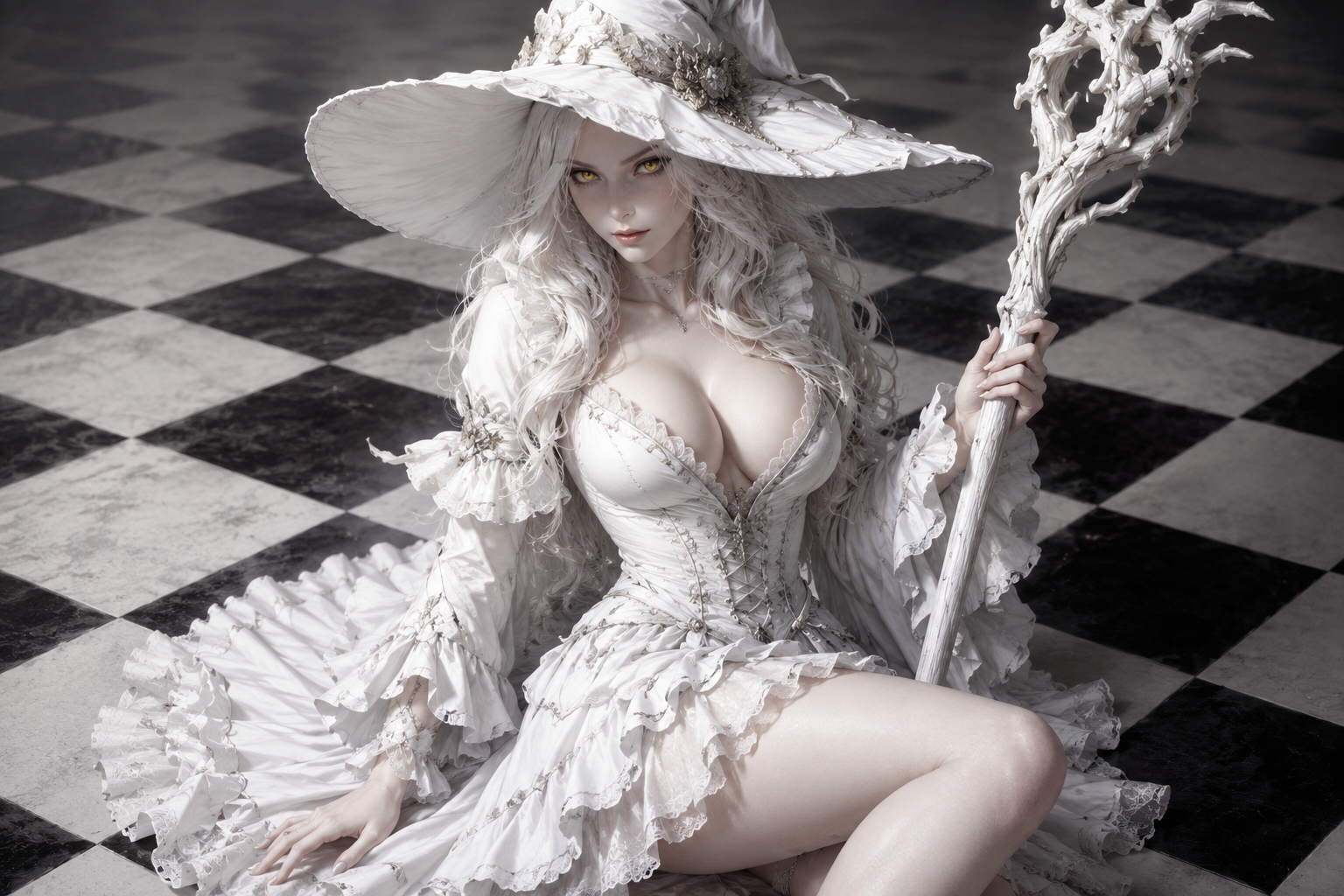
The Goddess of Beauty once thought herself to have conquered time. But now, time gives her a chance to learn, to change, and to become. And one day, Newtonia may learn that if she cannot bring her dear friend back to life, she can at least weep for her.